


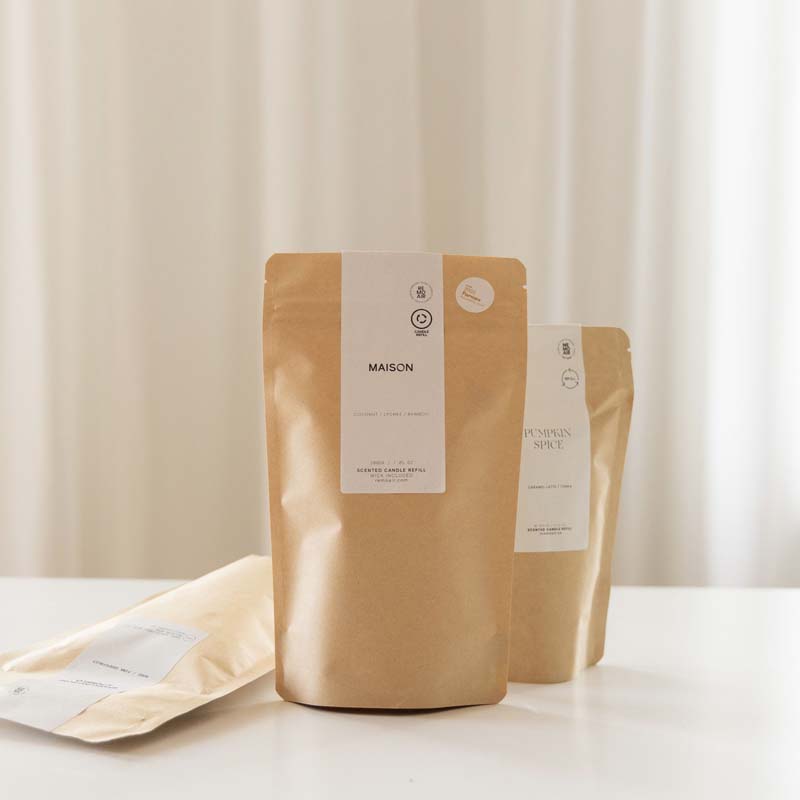





There's something almost meditative about lighting a scented candle. The flame flickers to life, and slowly the room fills with a soft note of sandalwood, freshly brewed tea, or perhaps a hint of bergamot. Suddenly, the home feels more alive, as if the scent is woven into the soul of the room.
Scented candles are more than just a decorative detail – they are small mood enhancers that affect both mood and atmosphere. The right scent can bring a calmer mind, a warmer feeling, or an elegant touch to the room. But how do you know which scents are suitable where? And what ingredients should you look for?
We delve into the world of scented candles – from wax types and essential oils to how you can use them to create a harmonious whole in your home. Come along.
What are scented candles and how do they work?
A scented candle is more than just melted wax and a wick – it's a small alchemical process where heat transforms solid fragrance molecules into an atmospheric experience. When the candle is lit, the wax begins to melt around the wick, and the essential oils or fragrance compounds are slowly released into the air.
But not all scented candles are created equal. The quality of the scented candle is determined by several factors: the type of wax, the fragrance compounds used, and how the wick is constructed. A natural wick made of cotton or wood burns more evenly, while some synthetic wicks can produce a sooty flame.
The role of wax in the composition of scented candles
The wax is the foundation of the scented candle and affects both burn time and how well the scent spreads. Here are some of the most common types:
- Soy wax – Perhaps the most commonly used wax today. A natural alternative that burns slowly and evenly. The wax is hotly debated as soy production is strongly associated with rainforest deforestation.
- Beeswax – Provides a subtle honey scent and is naturally air-purifying. Gives the wax a yellow tone and is also a common additive to stabilize other plant-based wax types.
- Paraffin wax – Common in cheaper candles, but can emit more soot and synthetic substances. Paraffin is primarily made from petroleum, so you could simply say that you are burning crude oil.
- Coconut wax – A more luxurious variant that gives a creamy consistency and even scent dispersion. However, scented candles made of 100% coconut wax have more difficulty spreading the scent over longer distances. From sustainable cultivation, this is a good environmentally friendly option.
- Rapeseed wax – A natural wax that has gained popularity in recent years. This wax is often harder and more easily blended with fragrance oils in its pure form. An environmentally friendly option.
The structure of scent – a symphony of notes
Just like a perfume, a scented candle is built in layers – top notes, heart notes, and base notes – which together create an overall experience. The initial notes provide an immediate impression, while the base lingers and shapes the candle's long-lasting character.
Top notes – the first impression
Light a candle, and the first thing you smell are the top notes. They are light, volatile, and usually disappear within the first 10-15 minutes. Common top notes include:
- Fresh citrus scents like bergamot, lemon, and grapefruit.
- Aromatic herbs like eucalyptus, mint, and rosemary.
- Fruity elements of apple, peach, or blackcurrant.
Heart notes – the soul of the scent
As the top notes fade, the heart notes emerge. They form the very core of the scent and are often softer, more floral, or spicy. Here we often find:
- Floral tones like jasmine, lavender, and peony.
- Spicy elements like cinnamon, cardamom, and clove.
- Fruity accents of fig, plum, or red berries.
Base notes – what lingers
The base notes are the candle's foundation and the ones that linger longest in the room, sometimes for hours after the flame has gone out. They are deep, earthy, and often a little mysterious:
- Woody elements of sandalwood, cedarwood, and patchouli.
- Soft, warm tones of vanilla, amber, and musk.
- Smoky and balsamic notes like frankincense and tonka bean.
The perfect combination of these three levels creates a scent experience that feels both thoughtful and addictive.
Benefits of using scented candles at home
Scented candles do more than just spread a pleasant fragrance – they have the ability to affect mood, energy, and how we perceive a room. Some scents calm the mind, others invigorate, and some can even evoke nostalgic memories from times gone by. Here are some of the greatest benefits of surrounding yourself with fragrant candles.
1. Creates a harmonious atmosphere
There's a reason we light candles on dark evenings or for special occasions – living flames create a sense of presence and warmth. When you add a fragrance to the flame, the experience becomes even more enchanting. A soft light with notes of vanilla and sandalwood can transform a cold room into a warm oasis, while a fresh citrus scent can give the kitchen a crisp, clean feel.
2. Affects mood and state of mind
Aromatherapy is not a myth. Scent molecules have a direct connection to the brain's limbic system, which controls emotions and memories. Research also shows that the positive effects of scent evoke positive emotions and memories, which can, among other things, explain why some scents feel more soothing or nostalgic.
⎯ Lavender and pine ⎯ Perfect for calming nerves and creating a relaxing atmosphere in the bedroom.
⎯ Citrus and peppermint ⎯ Invigorating scents that boost focus and energy, ideal for the home office.
⎯ Vanilla and tonka bean ⎯ Warming and comforting scents that create a cozy and inviting feel in the living room.
3. Can enhance the feeling of the decor
Scented candles are more than a fragrance experience – they are part of the decor. A minimalist glass cup with a simple white candle can enhance a Scandinavian aesthetic, while a dark, heavy ceramic pot with a spicy scent fits perfectly in a home with a bohemian feel. By choosing scents that match the home's style and energy, you can create a complete experience that feels thoughtful and harmonious.
4. A subtle signature scent for your home
We often associate places with specific scents. Just as some hotels or shops have their own signature scent, your home can too. By consistently using a particular scent – perhaps sandalwood, cedarwood, or fig – you create a subtle but unmistakable feeling of coming home.
5. A ritual for calm and mindfulness
Lighting a scented candle can be a small ritual that creates a sense of calm and presence in everyday life. It can signal the start of a quiet moment with a book, a moment of meditation, or simply a way to unwind after a busy day. Scent and light in combination become a subtle reminder to take a deep breath and be present in the moment.
How to choose the right scented candle for your home
Choosing scented candles is a bit like choosing a perfume – it's about more than just a pleasant scent. It should feel right for the room, the season, and your state of mind. Here are some guidelines to help you find the perfect scented candle for your home.
1. Adapt the scent to the room
Every room has its own energy, and the scent should harmonize with it.
- Bedroom ⎯ Here you want to create a calm and relaxing atmosphere. Scents like lavender, vanilla, and sandalwood are perfect for promoting sleep and tranquility.
- Living room ⎯ The social heart of the home deserves a warm and inviting scent. Think woody notes of cedarwood and musk, or something soft and luxurious like fig and tonka bean.
- Kitchen ⎯ Here, fresh and clean scents work best – citrus, eucalyptus, or basil neutralize cooking odors and provide a fresh feel.
- Bathroom ⎯ A spa-like feeling is created with scents of eucalyptus, sea salt, or white tea.
2. Adapt to the season
Just as we change perfume or clothes with the seasons, scented candles can follow the changing of the seasons.
- Spring ⎯ Light, fresh floral scents like peony, jasmine, or citrus.
- Summer ⎯ Sea breeze, coconut, lime, and sun-warmed fruits create a tropical feel.
- Autumn ⎯ Spicy notes like cinnamon, cardamom, and burnt sugar create a warm and cozy atmosphere.
- Winter ⎯ Deep, cozy scents of cedarwood, amber, and warm vanilla make the home feel embracing.
3. Quality over quantity
Not all scented candles are created equal. Do you want a clean, long-lasting scent experience? Then it's worth investing in high-quality candles.
- Choose natural wax ⎯ Soy wax, coconut wax, or beeswax provide a more even and cleaner burn compared to paraffin.
- Avoid synthetic fragrances ⎯ Look for candles with natural essential oils instead of artificial fragrances, which can sometimes feel chemical or overwhelming.
- Check the wick ⎯ A wood wick crackles pleasantly and gives a rustic feel, while a cotton wick provides a stable and soot-free flame.
4. Test and combine scents
Just like with perfume, you can build a unique scent experience by combining several scented candles. A vanilla candle can be balanced with a woody tone of cedar, or you can mix citrus and herbs for a fresher scent profile.
5. Consider the scent intensity
Some scented candles are subtle and blend into the background, while others are powerful and fill an entire room. Larger rooms usually require a candle with a higher scent concentration or multiple candles to be effective. Experiment to find the right balance.
Creative ways to use scented candles in your decor
Scented candles are not just a fragrant detail – they can also serve as an aesthetic part of your decor. Placed correctly, they can enhance the home's style, create cozy corners, and even serve as a personal statement. There's also a reason we maintain a clean and stylish design. The idea is that our scented candles should fit into most homes and interior styles. Here are some inspiring ways to integrate scented candles into your decor.
1. Build a harmonious light installation
Place several candles of different sizes and shapes together to create an elegant and inviting feel. A group of three to five candles on a beautiful tray – preferably in different materials like glass, ceramic, and metal – gives a naturally balanced look.
2. Use scented candles as part of your "coffee table styling"
A fragrant candle can elevate the entire feel of your coffee table. Combine it with a stack of beautiful books, a minimalist vase with fresh flowers, and perhaps a small sculpture. This way, the scented candle becomes a natural part of the room, rather than just a functional detail.
3. Enhance the feel of the bathroom
A scented candle by the bathtub or sink immediately creates a luxurious, spa-like feeling. Candles with notes of eucalyptus, sea salt, or white tea enhance the sense of freshness and relaxation. Want to take it a step further? Place the candle in a beautiful marble bowl or on a small wooden tray for an extra stylish touch.
4. Create a welcoming entrance
The first impression of a home begins in the hallway. A scented candle with a subtle but distinct fragrance – perhaps fig, cedarwood, or bergamot – can create a warm and inviting feeling right at the door.
5. Use candles to define different rooms
Different scents can help mark different zones in the home. A fresh, invigorating candle in the home office can signal productivity, while a softer, calming scent in the bedroom helps you unwind. By allowing each room to have its own signature scent, you create a subtle but thoughtful atmosphere.
Conclusion – a scent journey through your home
Scented candles are more than just a detail – they are, in our opinion, an experience. They can transform a room, enhance a feeling, and even deeply affect our mood. By choosing the right scents, materials, and placement, you can create a harmonious atmosphere that reflects your style and personality.
Whether you light a candle to unwind after a long day, welcome guests with a signature scent, or simply to add an extra dimension to your decor, it's a small action with a big effect.
So the next time you light a scented candle, take a deep breath and let the scent transport you somewhere – perhaps to a sun-drenched Mediterranean garden, a misty forest glade, or just a moment of tranquility in your own home.
Sources:
https://pmc.ncbi.nlm.nih.gov/articles/PMC3612440/
https://www.tandfonline.com/doi/abs/10.1080/00207450601042094

