





There is something beautiful in how a material can carry both history and future in the same form. For us, the journey through different waxes has been just that – a slow, curious wander towards something that not only burns beautifully but also feels right in the heart. And today, we stand here with a raw material that has become our compass: organic wax.
When we started in 2018, we had no idea how complex the world behind a scented candle truly is. We thought wax was a simple choice. It turned out to be anything but simple. It turned out to be an entire science. A worldview. A statement. And perhaps most importantly, a feeling.
What exactly is organic wax?
When talking about organic wax, it's easy to think it's just about avoiding synthetic additives. But it's about so much more. Organic wax is a wax where the raw material is cultivated responsibly, with respect for soils, water, and ecosystems. It is a wax that carries certifications such as ECOCERT Cosmos Approved — a guarantee that the wax adheres to strict organic guidelines throughout its entire lifecycle.
This means transparency in cultivation. It means the raw material has not traveled around the world. And it means that every tealight, every scent, every flame rests on the foundation of responsible production.
Organic wax is simply a choice that goes beyond the product in your hand. It reflects an intention.
Why organic wax has become so important
The candle industry has long relied on paraffin, soy, and coconut. Materials that work technically – but often at the expense of both the climate and ecosystems. When the WWF published its report on the link between soy and deforestation in 2019, much became clearer to us. There were no shortcuts. We needed to dig deeper, reject what didn't align with our values, and dare to rethink.
This is where organic wax truly becomes relevant. When the raw material is cultivated in Europe, without traveling across continents. When its production is rooted in both quality and ecology. When sustainability is not a marketing issue but a concrete action. That's when you start to see the difference — not just in the product, but in responsibility.
Sunflower wax: our organic wax with the lowest carbon footprint to date
That we landed on sunflower wax was actually inevitable. It is organic wax in its purest form: European-grown, traceable, certified, and produced with a significantly lower CO₂ profile than any wax we have previously used. It is also a wax that harmonizes with our creativity.
The sunflower wax we work with is produced in France, a region where soils are cared for and raw materials are handled gently. For us, it matters that our organic wax doesn't cross oceans. Transport distances are shorter, the raw material is closer, and the entire process exudes reasonableness.
And then there's something poetic about the sunflower. A material that carries the sun in its name and light in its nature — an organic wax that almost feels made to burn slowly.
How organic wax affects scent and burn properties
Organic wax is a living material. It moves, changes, reacts. In the studio, we've learned that sunflower wax requires a different kind of responsiveness. Some scents bloom wonderfully in it. Some become soft and clean. Others — well, they gain a whole new personality.
But it is precisely this that makes organic wax so wonderful to work with. It burns slowly. It burns cleanly. It creates a warm and soft flame that feels less industrial and more... human. The burn time is extended, the combustion is cleaner, and the feeling more intimate.
For us, it was important that an organic wax not just be organic on paper. It had to perform. It had to carry the scent with dignity. And when we found the right blend of sunflower wax, everything fell into place.
Our journey from rapeseed to sunflower: when the will to do right becomes the way forward
We have long worked with soy, rapeseed, and coconut – and each raw material has taught us something. But it was when we started experimenting with organic wax that the journey took a new direction. It became clear that we were not just looking for a material, but for a philosophy.
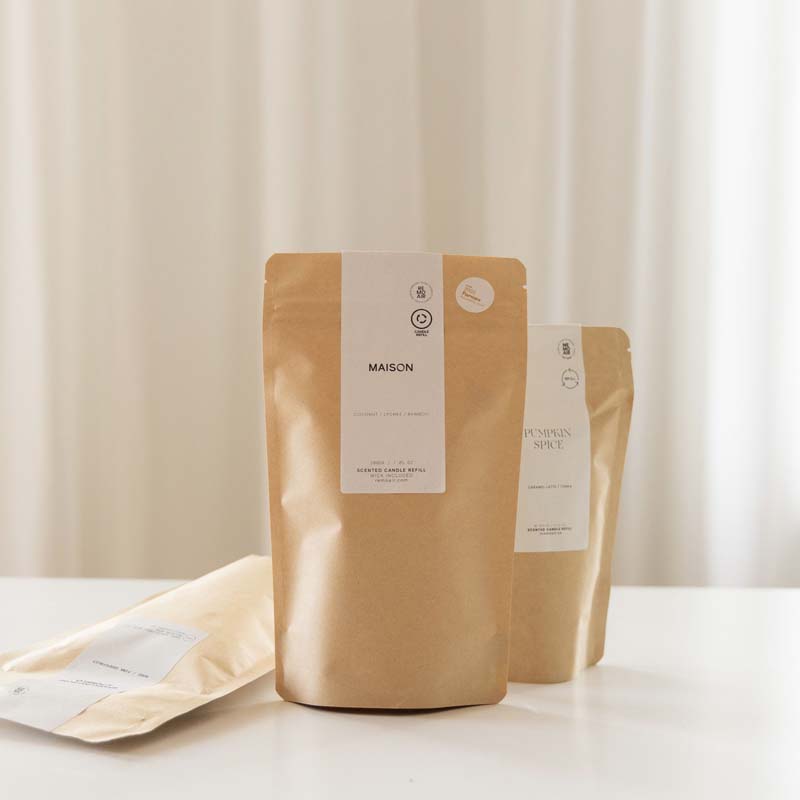
Sunflower wax also opened the door to creating products like our refill pucks. The structure of the organic wax makes them both practical and beautiful. It's almost as if the wax itself wanted to show us what it could be used for.
This is what organic wax does: it creates opportunities.
Benefits of organic wax
• lower CO₂ footprint
• cleaner combustion
• vegan raw material
• longer and more even burn time
• certified and traceable production
• no synthetic additives
• shorter transport distances
• beautiful and stable at room temperature
The future belongs to organic wax
We believe that the future of the candle industry will be characterized by just this: honesty, transparency, and a desire to create products that both feel good and do good. Organic wax is not a trend. It is a shift. A new way of thinking about what we light in our homes and why.
For us at Remoair, organic wax is about more than ingredients. It's about creating something that lasts – for a long time, for everyone, for the earth.
And we hope that when you light your candle, you feel exactly that.

